


Introduction
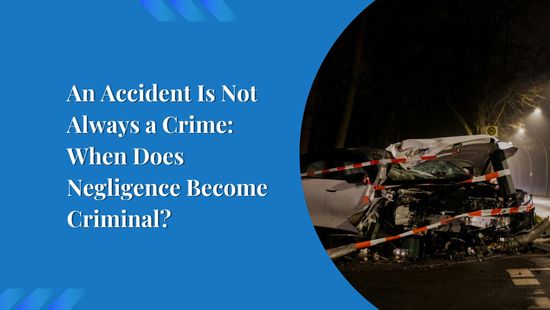
Accidents happen every day. A vehicle collides with another vehicle. A workplace incident causes injury. A professional makes an error. Someone dies because reasonable precautions were allegedly not taken.
The existence of harm, however, does not automatically mean that a criminal offence has occurred. Criminal negligence requires the law to distinguish between an unfortunate accident, civil negligence and conduct serious enough to attract criminal consequences.
Civil Negligence and Criminal Negligence
Civil negligence generally concerns whether a person failed to exercise the standard of care expected in the circumstances and thereby caused loss or injury.
Criminal law operates at a different threshold. The question is whether the conduct satisfies the ingredients of the particular criminal offence and reflects the degree of negligence required by law.
This distinction protects individuals from being criminally prosecuted merely because an accident occurred.
Why the Circumstances Matter
Suppose a driver is involved in an unexpected accident despite taking reasonable precautions. The outcome may be tragic, but the circumstances may not necessarily establish criminal negligence.
The position can be different where the conduct demonstrates a serious disregard for the safety of others. Evidence concerning speed, warnings, safety procedures, professional standards and the surrounding circumstances may become important.
The law therefore examines conduct, not simply consequences.
Professional Negligence
Cases involving doctors, engineers, employers and other professionals can raise particularly sensitive questions. A professional error should not automatically be treated as criminal negligence because doing so could convert every unsuccessful professional decision into criminal litigation.
At the same time, professional status cannot provide immunity where the legal threshold for criminal negligence is genuinely established.
The balance requires careful evaluation of evidence and the applicable legal standard.
Why This Matters
Criminal negligence cases demonstrate an important principle of criminal justice: punishment should follow culpable conduct, not merely unfortunate consequences.
For organisations, proper safety protocols, training, supervision and documentation can therefore serve both preventive and evidentiary purposes.
Key Takeaways
• An accident does not automatically establish criminal negligence.
• Criminal negligence requires the statutory ingredients of the relevant offence.
• The degree and circumstances of negligence matter.
• Professional errors require careful evaluation before criminal liability is imposed.
• Safety records can become important evidence in negligence litigation.
Conclusion
The law must protect victims of genuinely culpable negligence without converting every accident into a criminal prosecution.
The crucial question is therefore not simply whether harm occurred, but whether the conduct that caused it crossed the legal threshold for criminal responsibility.


